

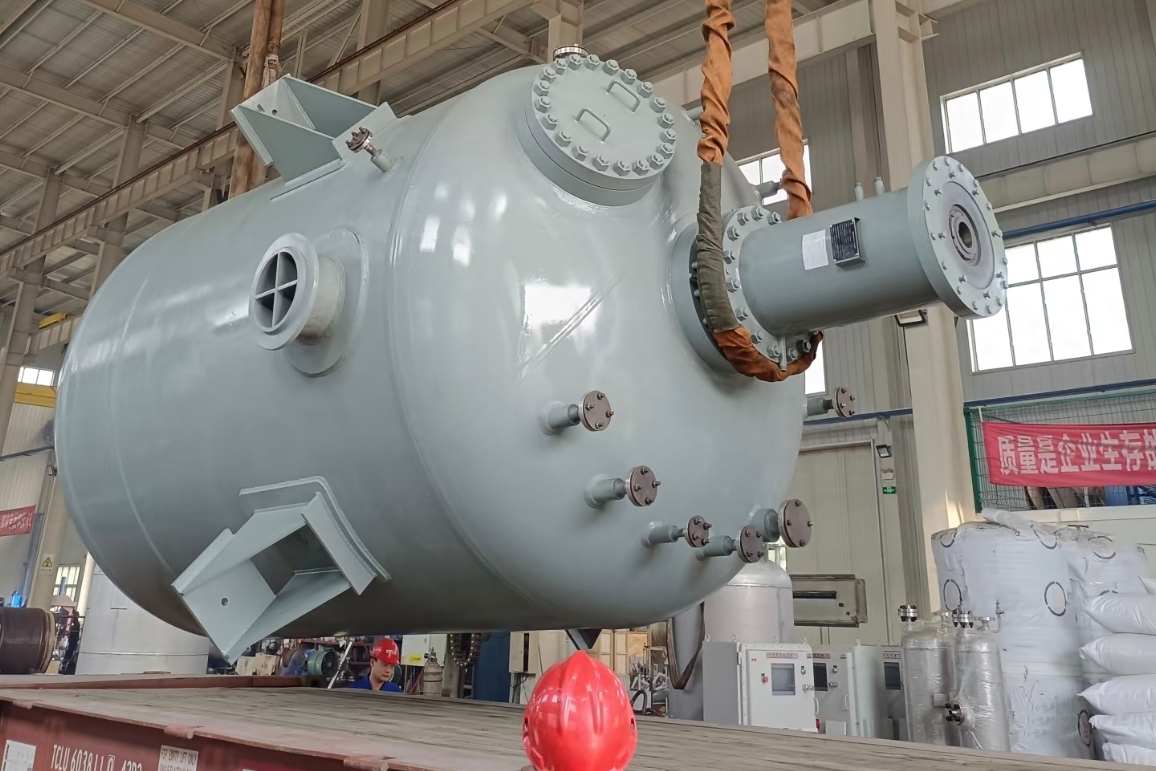
Tianmiao Chemical Machinery has developed a advanced hydrogenation reactor vessel series for demanding refining and chemical applications. These reactors operate under extreme conditions: pressures up to 22 MPa and temperatures reaching 480°C.
The equipment handles hydrogen-rich environments with corrosive sulfur compounds. Each hydrogenation reactor vessel is custom-engineered for fixed-bed, moving-bed, or fluidized-bed processes.
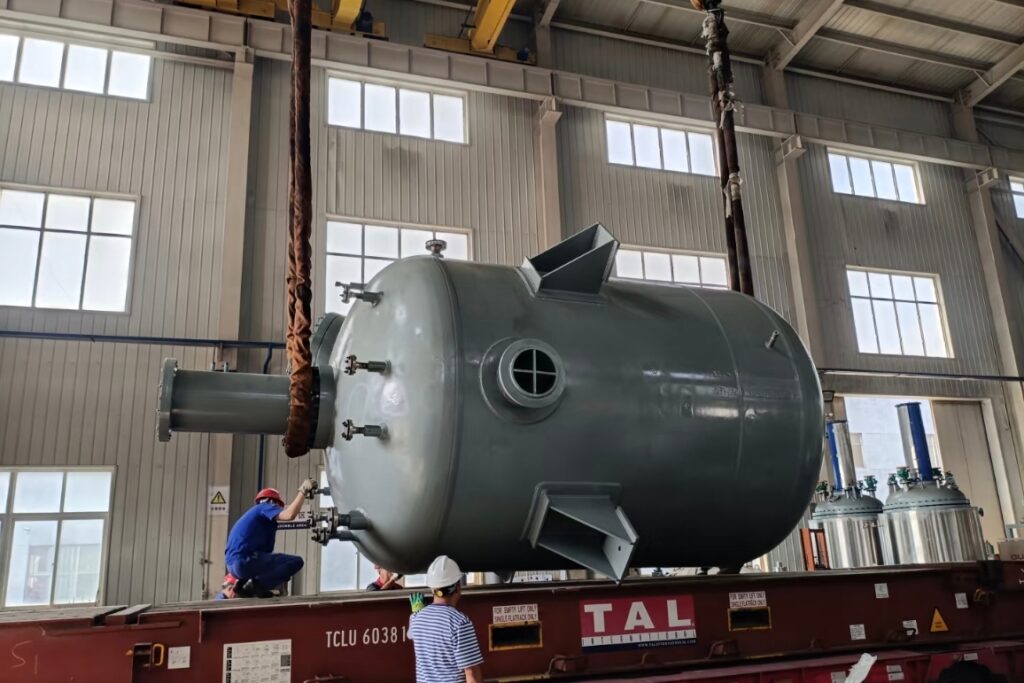
Hydrogenation Reactor Vessel – Materials Engineered for Hydrogen Service
Advanced Alloys Resist Hydrogen Attack and Embrittlement
The hydrogenation reactor vessel shell uses 2.25Cr-1Mo-0.25V steel forgings. This chromium-molybdenum-vanadium alloy resists hydrogen embrittlement and temper embrittlement. An internal 316L stainless steel overlay protects against sulfide stress corrosion cracking. Material selection follows strict quality control: vacuum melting and electroslag remelting ensure purity. Each forging undergoes full inspection before fabrication begins.
Construction and Welding for High-Integrity Service
Manufacturing a reactor vessel demands precision at every step. Large plates are rolled on CNC equipment. Automatic submerged arc welding joins shell sections with controlled heat input. Post-weld heat treatment (PWHT) relieves residual stress. Every circumferential and longitudinal seam receives 100% radiographic testing (RT) and ultrasonic testing (UT). Helium leak testing verifies seal integrity. The result is a zero-defect vessel ready for critical hydrogen service.
Sizes and Capacities for Diverse Applications
Tianmiao produces reactor vessel units from 50 to 500 tons. Design pressure ranges from 10 to 22 MPa. Operating temperatures span 400°C to 480°C. This flexibility supports refinery hydrotreating, residue hydrocracking, coal-to-liquids hydrogenation, and green hydrogen chemical synthesis. The reactors accommodate various catalyst bed configurations.
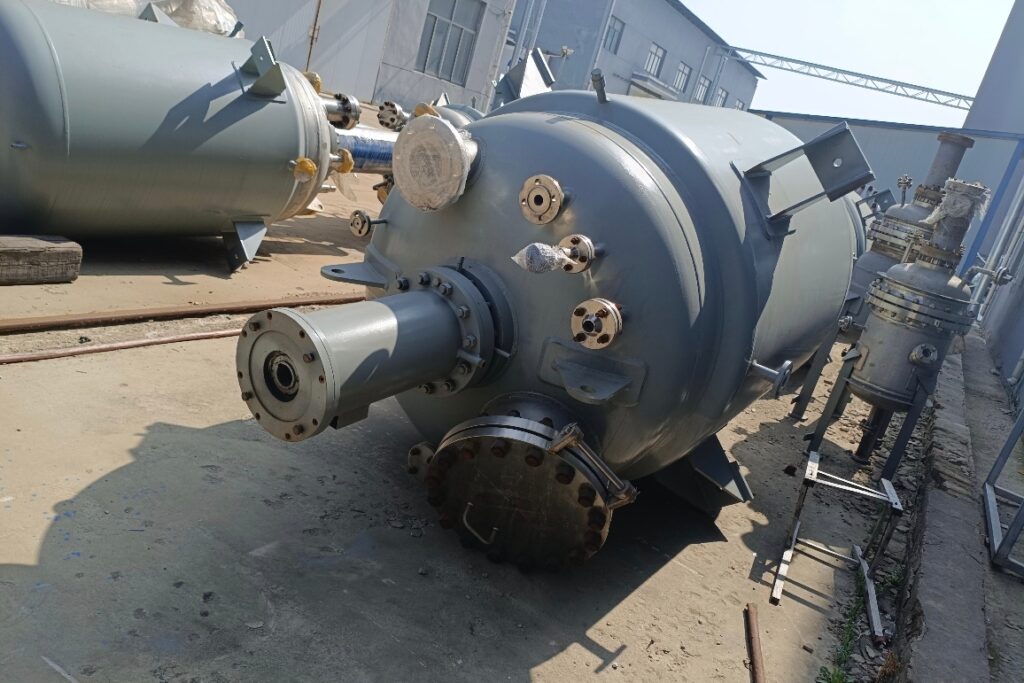
Hydrogenation Reactor Vessel Applications and Performance
Refinery Hydroprocessing and Upgrading
A reactor vessel is essential for removing sulfur, nitrogen, and metals from crude fractions. It also converts heavy residues into lighter, more valuable products. The reactor’s robust construction withstands thermal cycling and pressure fluctuations typical of refinery service. Its corrosion-resistant overlay extends run lengths between turnarounds.
Coal-to-Liquids and Green Hydrogen Synthesis
In coal liquefaction and biomass-to-liquid processes, the reactor vessel enables high-pressure hydrogenation of synthesis gas. The same technology applies to green hydrogen routes, where renewable hydrogen reacts with captured carbon oxides. These applications demand the same material integrity and fabrication quality as refinery service.
Long Service Life with Minimal Maintenance
The reactor vessel design prioritizes durability. The 316L overlay prevents corrosive attack on the base metal. The 2.25Cr-1Mo-0.25V forging resists hydrogen-induced cracking. Proper operation and scheduled inspections extend vessel life beyond 20 years. Tianmiao provides full documentation, including material certificates, weld maps, NDT reports, and test records, supporting global project audits and maintenance planning.
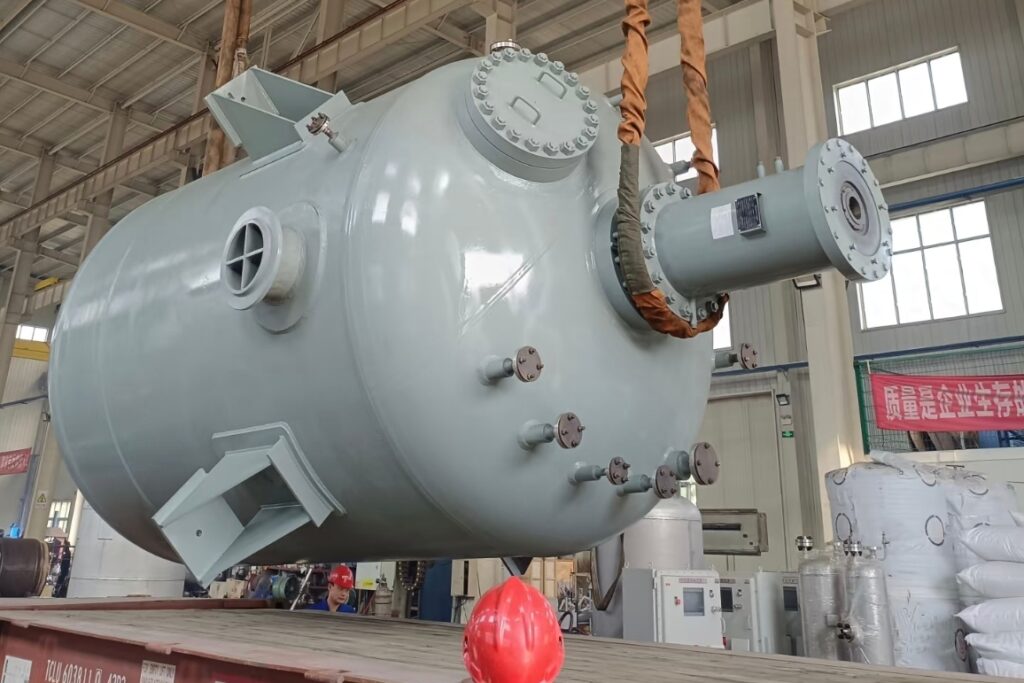
Hydrogenation Reactor Vessel Manufacturing Excellence and Quality Systems
Advanced Fabrication Facilities
Tianmiao operates large CNC rolling machines, automatic submerged arc welders, heat treatment furnaces, and precision NDT equipment. The company follows a full quality traceability system. Critical processes include vacuum melting, electroslag remelting, automatic welding, and post-weld heat treatment. The facility produces up to 20 high-end hydrogenation reactors annually.
Stringent Quality Control at Every Stage
Each reactor vessel undergoes rigorous inspection. Dimensional checks verify shell roundness and alignment. All welds receive 100% RT and UT. Helium leak testing confirms seal integrity. Hydrostatic testing at 1.5× design pressure validates overall strength. These checks ensure zero-defect delivery and reliable field performance.
Global Compliance and Market Access
The reactor vessel meets ASME Boiler and Pressure Vessel Code requirements. Tianmiao holds the ASME U-Stamp for its reactor series. This certification confirms compliance with ASME Section VIII Division 2 standards. It covers design calculations, material selection, welding procedures, NDT, and pressure testing. The U-Stamp serves as a mandatory credential for equipment entering North American and other international markets. The company already holds domestic design and manufacturing licenses.
Conclusion
Tianmiao Chemical Machinery combines decades of experience with ASME certification. The reactor vessel delivers safety, reliability, and global compliance. For technical specifications or custom quotes, contact the Tianmiao engineering team.