

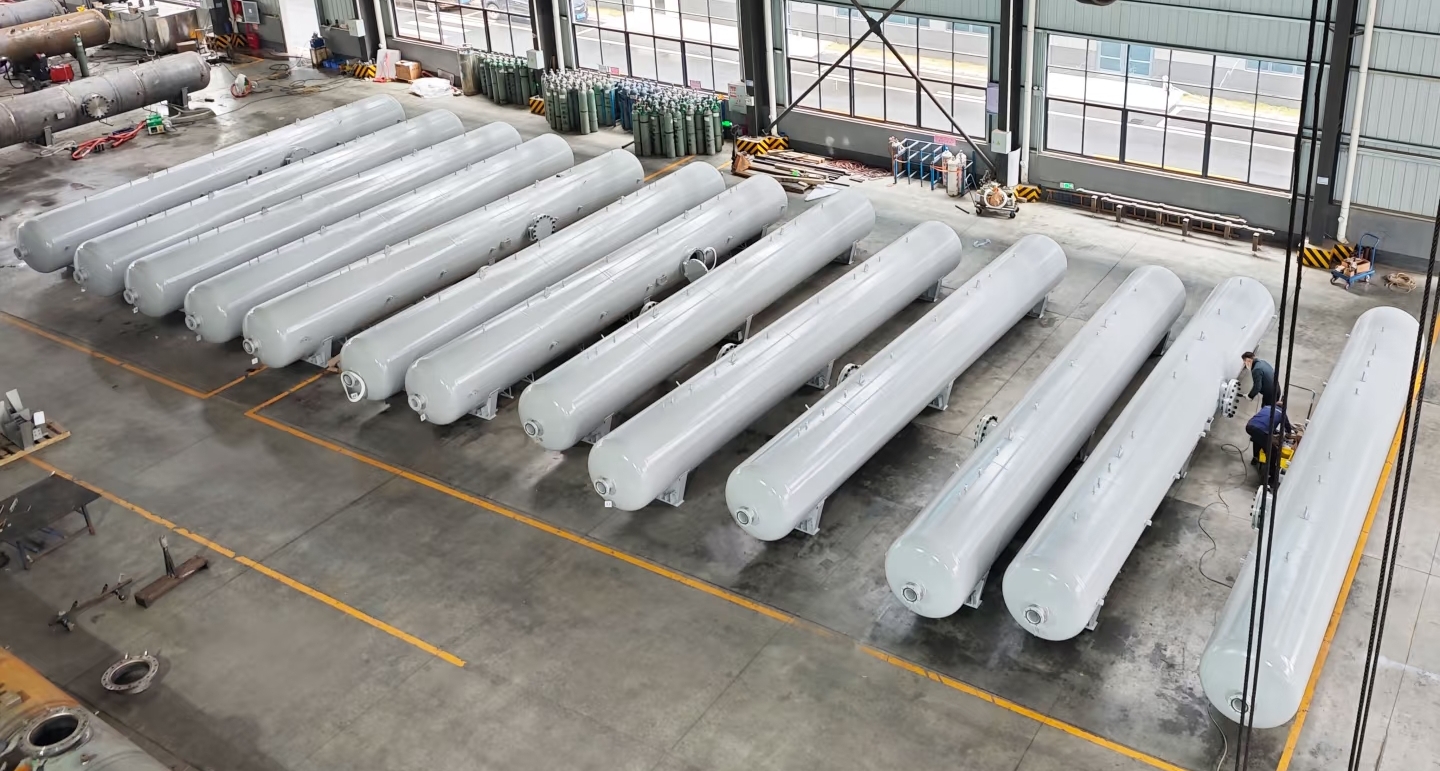
A high-temperature high-pressure buffer tank protects downstream equipment from sudden pressure surges. These vessels absorb flow fluctuations and maintain stable system operation. They play a vital role in oil refining, chemical processing, power generation, and pharmaceutical manufacturing.
Core Functions of a High-Temperature High-Pressure Buffer Tank
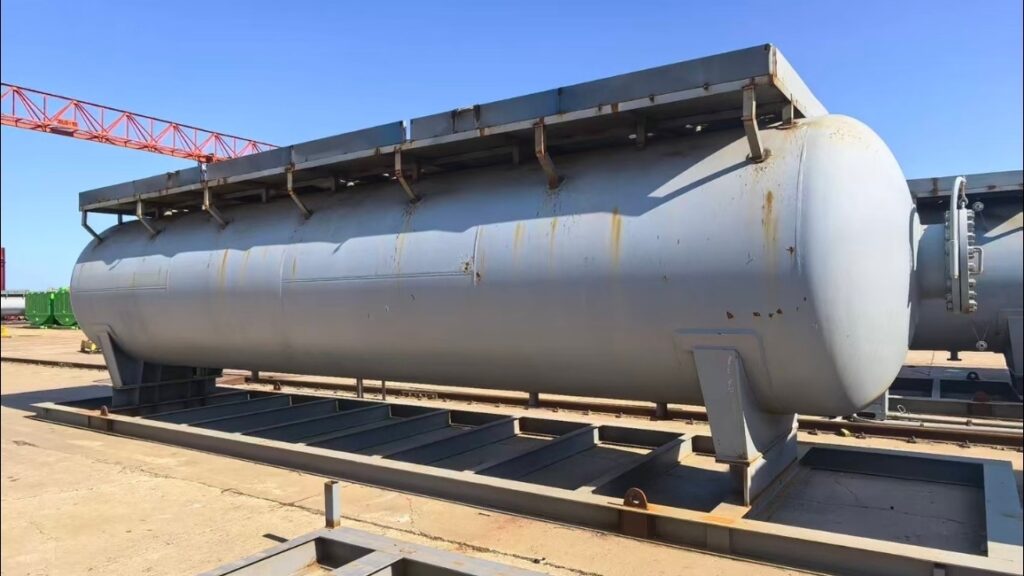
This equipment acts as a pressure shock absorber. It cushions rapid changes from pumps, compressors, or valves. Consequently, downstream instruments face fewer stress spikes.
Our equipment also separates gas from liquid in multiphase streams. This function prevents cavitation and reduces vibration. Additionally, it provides temporary storage for peak-demand periods.
A well-designed high-temperature high-pressure buffer tank operates reliably under extreme conditions. For example, some units handle design pressures up to 10.0 MPa. Their temperature range often spans from -20 °C to 54 °C.
Thus, these tanks stabilize both pressure and flow rate. They also minimize maintenance needs for connected equipment. Ultimately, they extend the entire system’s service life.
Material Selection for a High-Temperature High-Pressure Buffer Tank
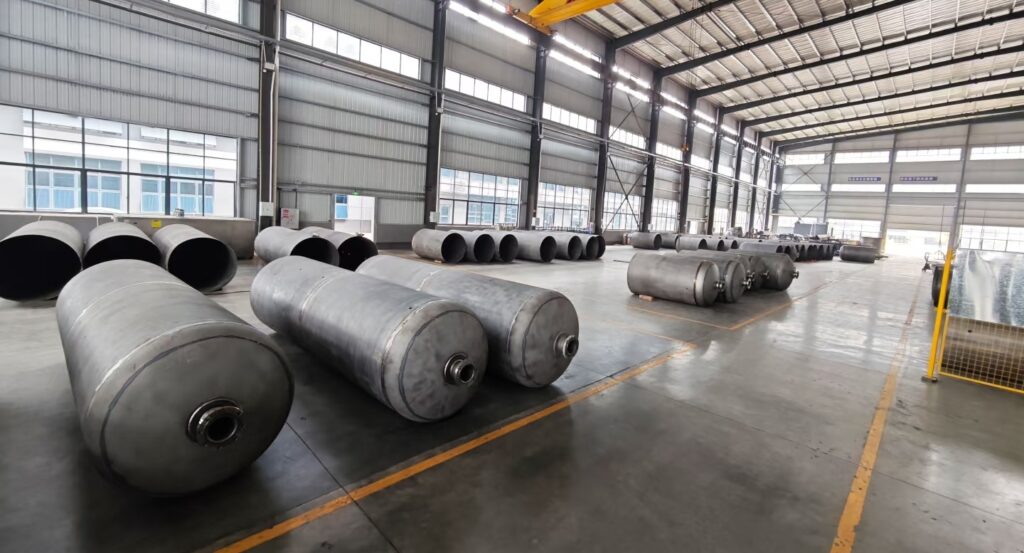
Manufacturers build these tanks from robust materials. Carbon steel suits many general-purpose applications. Stainless steel (e.g., 316L) resists corrosion and meets sanitary standards.
For highly aggressive media, engineers select PFA-lined or alloy vessels. Such materials withstand strong acids, alkalis, and high-purity requirements.
The structural design of a high-temperature high-pressure buffer tank follows strict codes (ASME, GB150). Every weld undergoes nondestructive testing. Furthermore, the tank features leak‑tight seals to prevent hazardous emissions.
Our equipment must handle thermal expansion without distortion. Therefore, designers incorporate expansion joints or flexible supports. They also verify the shell thickness against fatigue cycles.
Quality manufacturers provide full material certificates. They also perform hydrostatic tests at 1.5 times the design pressure. Consequently, users receive a vessel ready for long-term service.
Key Applications of High-Temperature High-Pressure Buffer Tanks
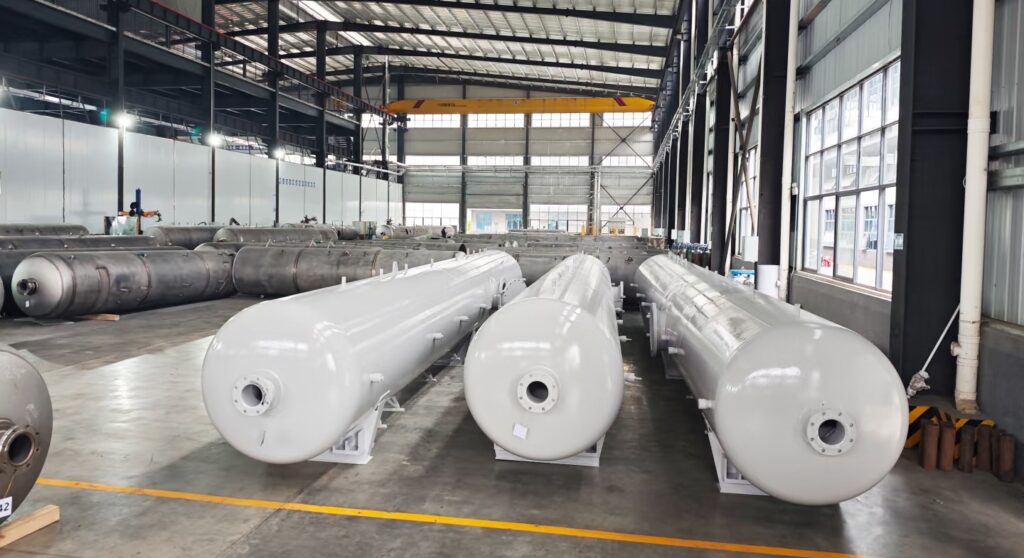
In petrochemical plants, these tanks buffer oil, gas, and chemical feedstock. Our equipmentsmooths out upstream pulsations before feeding reactors or separators.
In power generation, Our equipment works with desuperheaters. It stabilizes steam parameters for turbines and heat exchangers.
The biopharmaceutical industry uses sterile buffer vessels. They hold purified water, cleaning solutions, or inert gases. Stainless steel grades like 316L ensure product purity and withstand autoclaving.
In analytical laboratories, small buffer tank appear in microwave digestion systems. They contain sample-processing reactions under high pressure and temperature.
Additionally, nitrogen or oxygen high-temperature high-pressure buffer tank support industrial gas networks. They maintain consistent supply pressure for cutting, blanketing, or chemical injection.
Thus, these versatile vessels serve both heavy process industries and precision research environments.
Safety Assurance for High-Temperature High-Pressure Buffer Tank
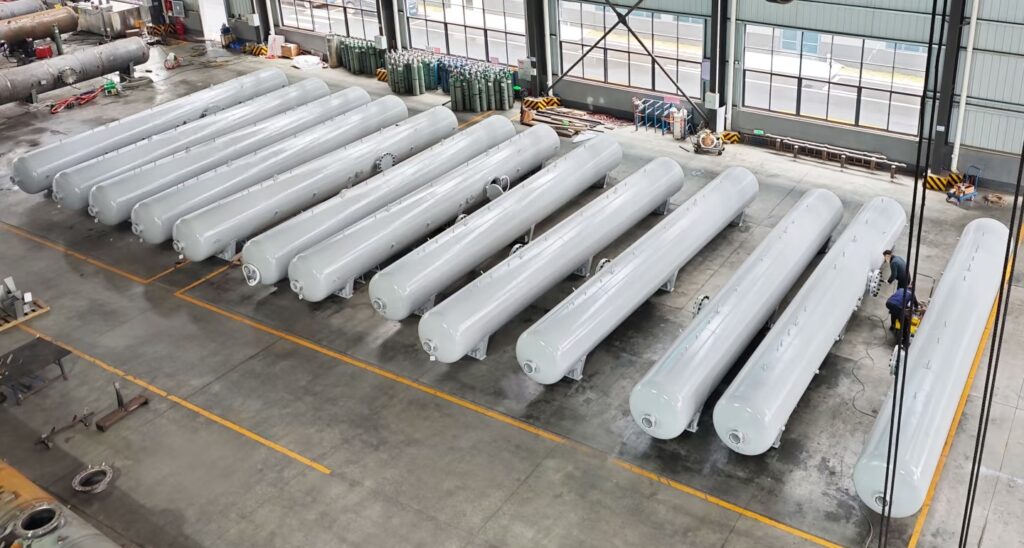
Because our equipment is a regulated pressure vessel, safety comes first. Users must purchase from licensed manufacturers only. Each tank requires registration with local safety authorities.
Operators should never exceed the nameplate pressure or temperature. Experienced personnel recommend running below 80% of the rated value. This practice provides a safe margin against unexpected spikes.
Regular inspection forms the backbone of safety. Perform visual checks monthly for external corrosion, dents, or leaks. Verify that pressure gauges read accurately and safety valves move freely.
Every three to five years, conduct nondestructive testing (NDT) on each high-temperature high-pressure buffer tank. Ultrasonic thickness measurements detect internal wall loss. Magnetic particle or dye‑penetrant tests reveal surface cracks.
Additionally, test the safety valve at least once a year. Replace any valve that fails to open at its set pressure. Document all inspection results for traceability.
Finally, keep operation logs and maintenance records. Train staff on emergency shutdown procedures. Consequently,Our equipment can serve safely for decades.
Tianmiao manufactures custom high-temperature high-pressure buffer tank for demanding conditions. We support material selection, design verification, and post‑sale inspection. Contact us for a reliable solution that stabilizes your process and protects your people.