

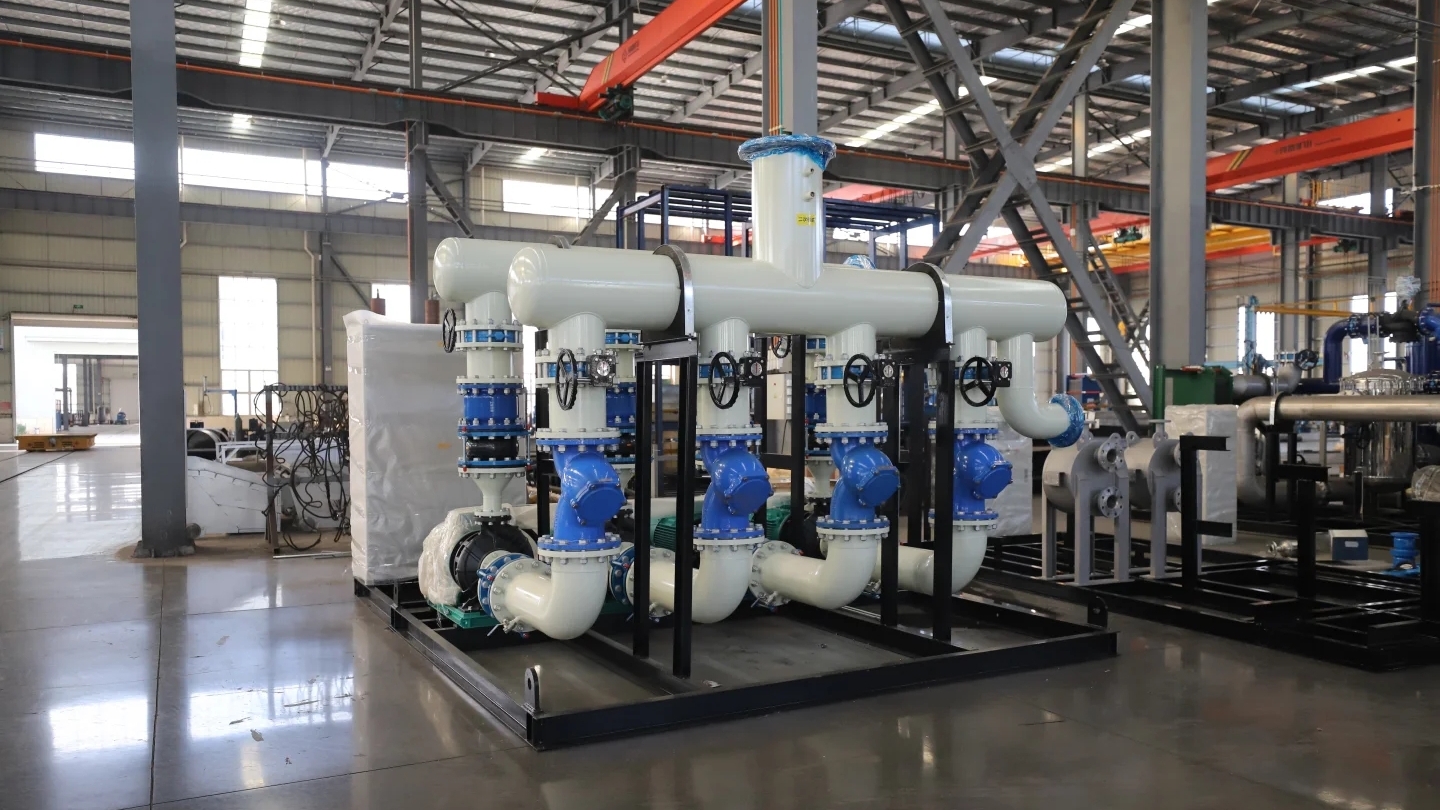
Tianmiao Chemical Machinery has launched its next-generation fully automatic heat exchanger unit. This product integrates high-efficiency heat exchange, variable-frequency pumping, intelligent control, and remote O&M.
The modular skid design and AI adaptive algorithms enable unattended operation and precise temperature management. The fully automatic heat exchanger unit has passed performance testing and entered mass production. It serves municipal heating, industrial waste heat recovery, chemical, and energy projects.
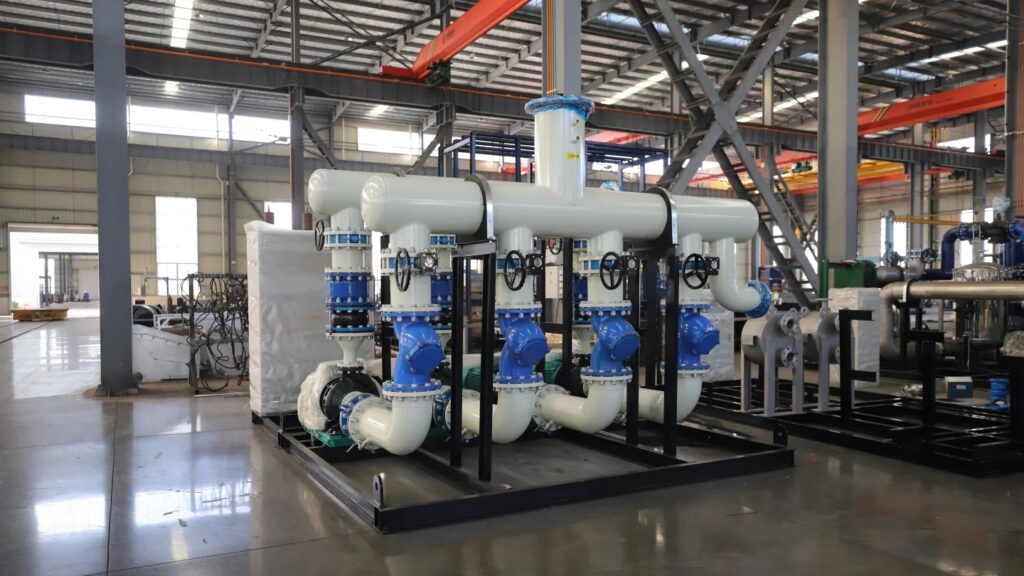
Core Advantages of the Fully Automatic Heat Exchanger Unit
Intelligent Control Delivers ±0.5°C Precision
The heat exchanger unit features a PLC-based control system with a touchscreen interface. It integrates temperature, pressure, and flow sensors. These sensors monitor over 20 operating parameters in real time. The AI algorithm automatically adjusts supply temperature, pump frequency, and valve opening based on outdoor temperature and load changes. Temperature control accuracy reaches ±0.5°C. This ensures “on-demand heating” with minimal human intervention.
Energy Savings of 25–40%
The core heat exchange elements use high-conductivity stainless steel plates or tube bundles. Heat transfer coefficient improves by over 30% compared to conventional designs. The heat exchanger unit also includes variable-frequency circulating pumps and intelligent water makeup. These features reduce electricity consumption by 25% to 40% and water usage by 15%. This aligns with global carbon reduction targets.
Compact Skid Design Cuts Installation Time by 60%
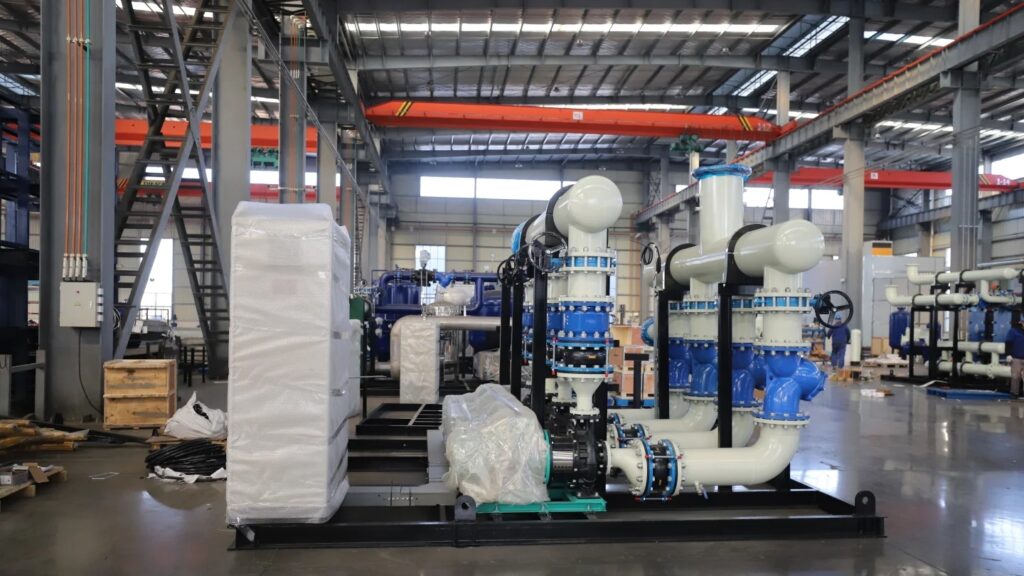
The heat exchanger unit adopts a modular, integrated skid construction. All components—heat exchanger, pumps, control cabinet, valves, and piping—are pre-assembled on a single base frame. Factory fabrication and testing eliminate on-site assembly delays. Installation time reduces by 60%. The compact design also decreases floor space requirements by 40%.
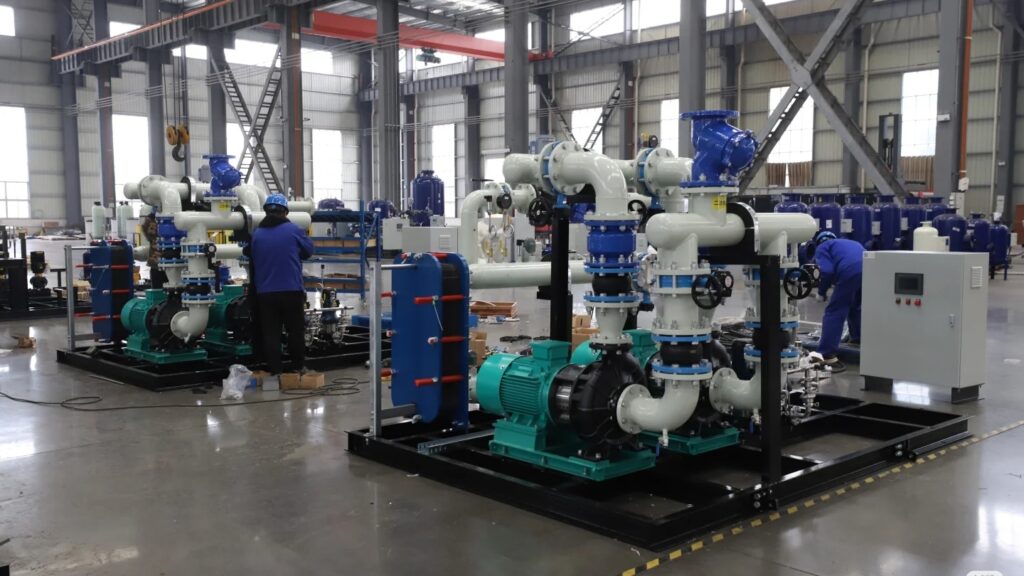
Fully Automatic Heat Exchanger Unit Engineering and Quality Assurance
Robust Materials and Certified Manufacturing
The heat exchanger unit uses 304 or 316L stainless steel for the primary wetted parts. These materials resist corrosion and extend service life. Welding and NDT procedures follow GB150 and ASME standards. The company holds a Special Equipment Manufacturing License (Pressure Vessels) and ISO 9001 certification. Core heat exchange equipment also carries the ASME U-Stamp for international project compatibility.
Multiple Safety Protections and Remote Monitoring
The heat exchanger unit includes comprehensive safety features. These cover over-temperature, over-pressure, water shortage, leakage, and pump fault conditions. The system generates audible and visual alarms for each fault type. Remote monitoring supports data logging, fault prediction, and diagnostics. These capabilities reduce maintenance costs by up to 50%. The control system also supports Modbus and TCP/IP protocols for integration with building automation and industrial IoT platforms.
Factory-Tested for Long-Term Reliability
Every heat exchanger unit undergoes factory pressure testing and NDT before shipment. All critical components are 100% inspected. This ensures leak-free operation and long-term reliability. The complete traceability system documents every manufacturing step.
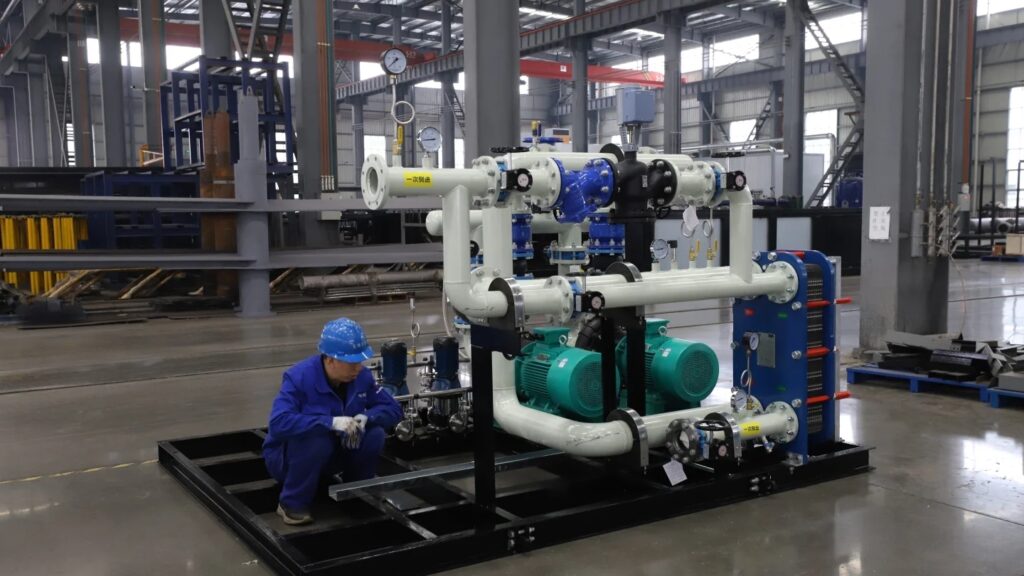
Fully Automatic Heat Exchanger Unit Applications and Market Value
Proven Performance in Diverse Settings
The heat exchanger unit has been successfully deployed in municipal district heating, residential heat exchange stations, commercial complexes, chemical plant waste heat recovery, and energy stations. Users report stable operation and significant energy savings.
Meeting the Demand for Smart, Efficient Solutions
China’s heat exchange equipment market exceeded RMB 85 billion in 2025. The sector continues to grow at 8–9% annually. Intelligence, energy efficiency, and integration are the dominant trends. The heat exchanger unit fills a regional gap in high-end intelligent heat exchange equipment. It supports energy-saving retrofits and digital upgrades in both heating and industrial systems.
Future Development and Global Expansion
Tianmiao plans further R&D investment in the heat exchanger unit series. Future versions will integrate digital twin and AIoT technologies. The company also aims to develop new products for low-temperature waste heat recovery and heat pump coupling applications. These innovations will serve global customers with efficient, intelligent, and reliable thermal energy solutions.
Conclusion
Tianmiao Chemical Machinery delivers the fully automatic heat exchanger unit for modern heating and industrial applications. For technical specifications or custom quotes, contact the Tianmiao engineering team.