

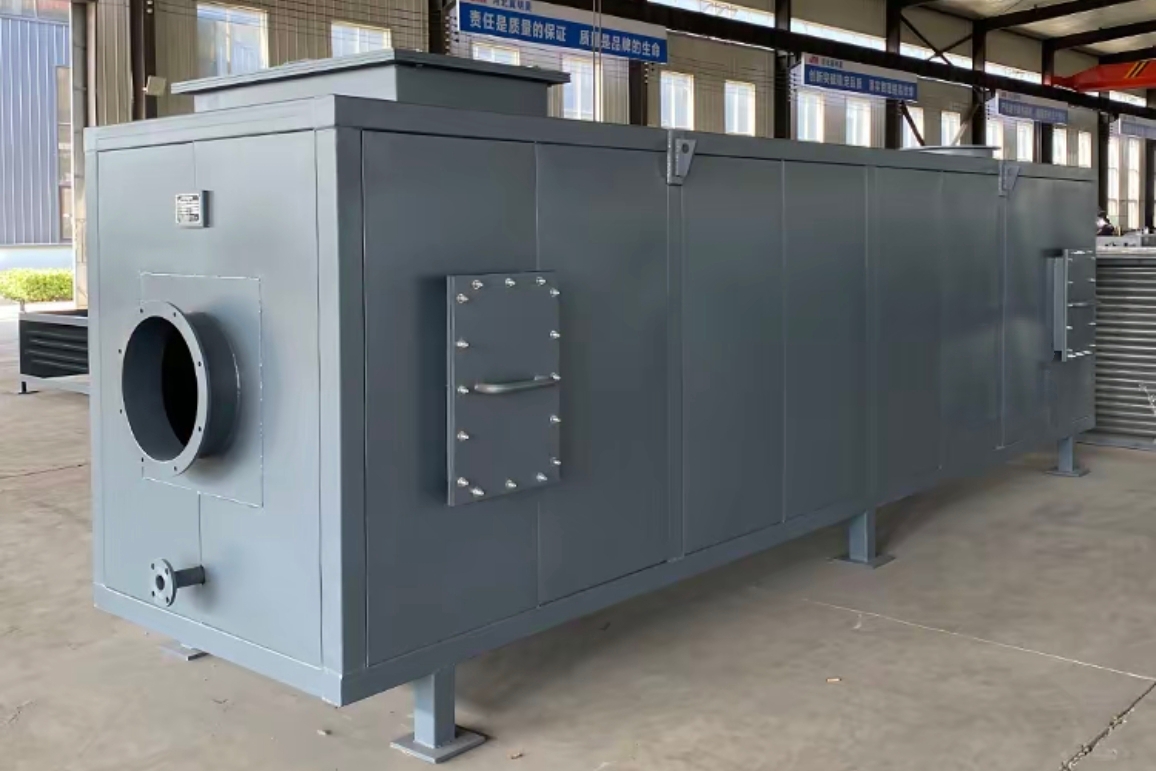
Under China’s dual‑carbon goals, the power sector urgently needs energy savings and emission reductions. A power plan flue gas heat exchanger solves this challenge. It combines a compact structure, high heat transfer efficiency, and strong corrosion resistance. Consequently, it becomes a core device for waste heat recovery in coal‑fired and gas‑fired power plants. This product has been exported to Germany in batches and gained wide EU market acceptance.
Flue Gas Heat Exchanger Compact Design Suits High‑Dust Flue Gas Conditions
The power plan flue gas heat exchanger uses a rectangular shell. Inside, it densely arranges high‑efficiency heat exchange tubes or plates. This layout maximizes the heat transfer area while reducing overall volume. Therefore, the unit fits easily into cramped power plant layouts.
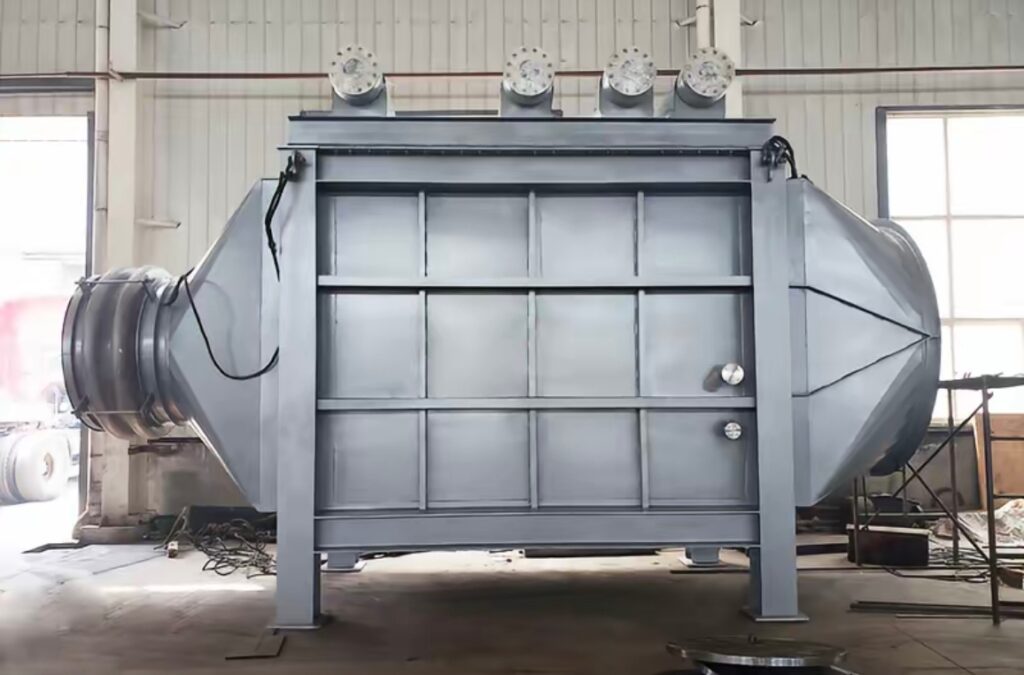
Both ends of the box have tapered inlet and outlet nozzles. Hot flue gas enters from the left side. After cooling, the gas exits from the right side. The tapered shape guides flow evenly. As a result, pressure loss drops and dust accumulation decreases significantly.
The top of the box provides four standard flanged connections. These ports allow water, air, or steam as heating media. Hot gas and the medium exchange heat through the tube bundles or plates. Recovered heat can preheat combustion air, warm condensate, or generate low‑pressure steam. Thus, overall energy efficiency improves markedly.
A removable access door sits on the side. Operators can clean, inspect, or replace internal bundles through this door. Reinforced support legs at the bottom ensure stable operation under heavy loads. Additionally, the entire unit uses carbon steel with a special anti‑corrosion coating. This coating withstands high temperatures, high dust levels, and sulfur‑bearing gases. Consequently, the heat exchanger lasts longer in tough power plant conditions.
Flue Gas Heat Exchanger High Heat Transfer Efficiency and Strong Anti‑Corrosion Protection
This heat exchanger achieves more than 85% heat recovery. Its optimized tube bundle arrangement and flow channels boost heat transfer by over 20% compared to conventional shell‑and‑tube designs. For example, a 300 MW coal unit can recover several megawatts of waste heat from its flue gas.
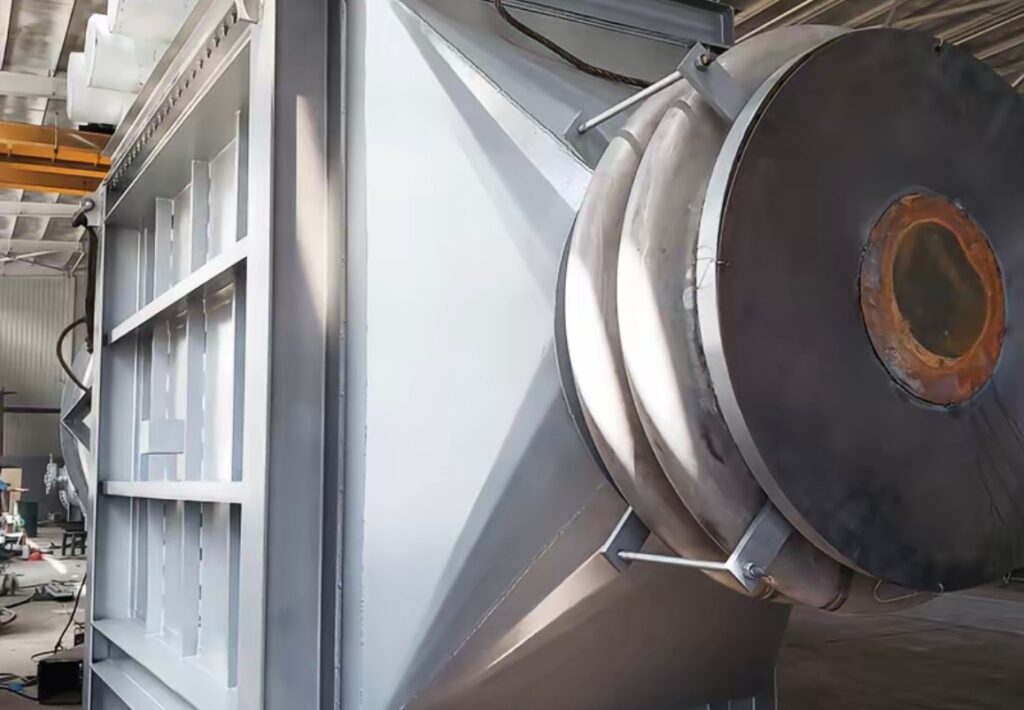
The advanced coating resists sulfuric acid dew‑point corrosion. It also handles fly ash erosion. Therefore, maintenance intervals extend, and replacement costs drop. Users can rely on continuous operation for years without frequent shutdowns.
Moreover, the fully welded shell eliminates any leakage risk. No flue gas escapes, and no cold air infiltrates. This feature protects downstream equipment like desulfurization systems. In short, the power plan flue gas heat exchanger offers both efficiency and durability.
Flue Gas Heat Exchanger Rigorous Certification and Successful Export to Germany
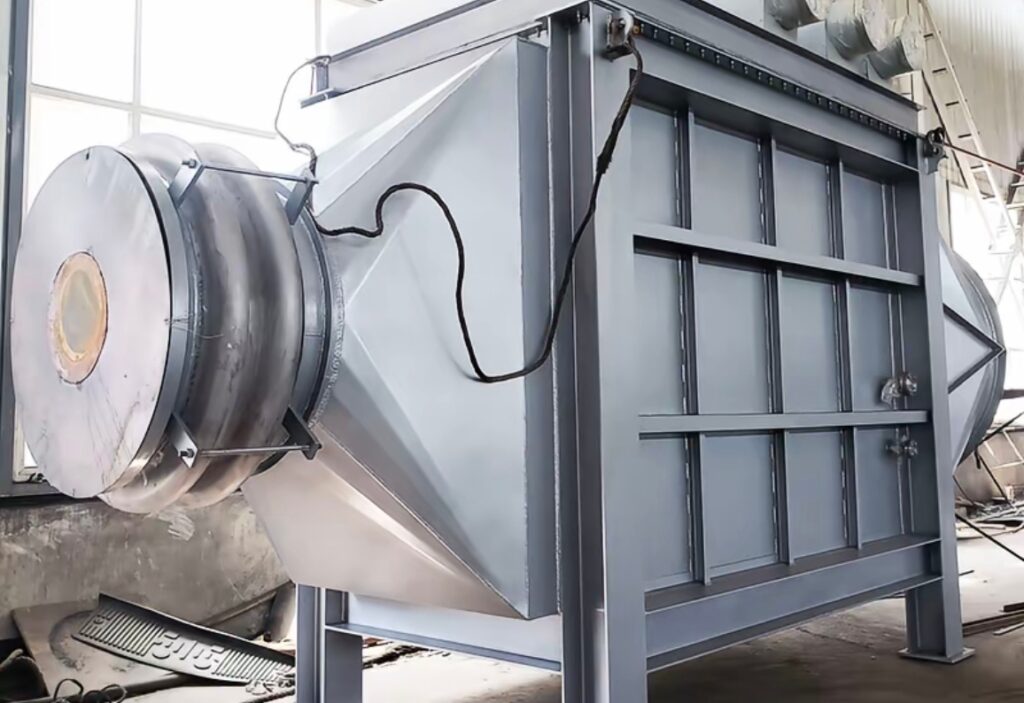
Tianmiao manufactures the power plan flue gas heat exchanger in strict accordance with German Industrial Standard (DIN) and EU CE requirements. Every unit undergoes a hydrostatic test at 1.5 times the design pressure. Then it passes an air tightness test and a coating performance check.
These procedures confirm zero leakage and reliable corrosion protection. Consequently, the product has been exported to Germany in bulk quantities. German power plants and environmental protection projects now use Tianmiao’s. Their positive feedback proves the international competitiveness of Chinese engineering.
Furthermore, the factory holds A2 pressure vessel manufacturing and ASME certifications. Each shipment includes full documentation: material certificates, weld maps, NDT reports, and test records. This transparency builds trust with European customers.
Flue Gas Heat Exchanger Flexible Customization and Long‑Term Operational Benefits
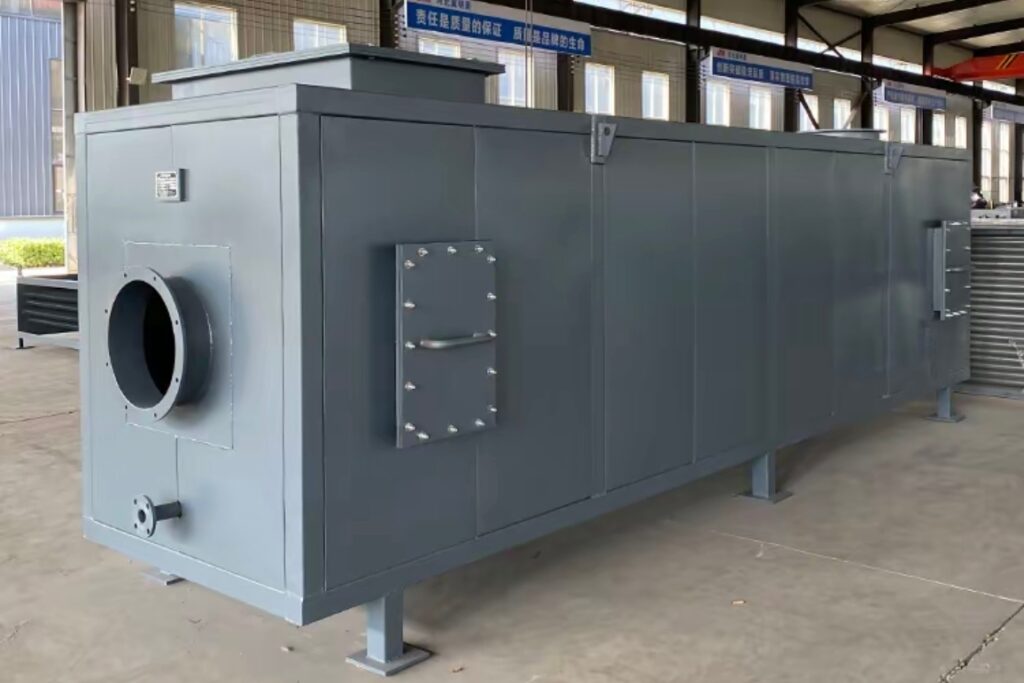
Unlike traditional round shell‑and‑tube units, we uses a modular design. Engineers can easily customize the width, height, tube length, and number of tube rows. They can also select different materials: carbon steel with coating, corten steel, or stainless steel.
Power plants can specify the heat exchange area and connection flange orientation. The unit adapts to various boiler sizes, from small industrial boilers to large utility boilers. Delivery lead times are short because of standardized production processes.
In addition, the removable access door reduces downtime. A typical cleaning job takes only a few hours. As a result, annual availability increases, and lost generation revenue decreases. The overall lifecycle cost of a power plan flue gas heat exchanger is significantly lower than that of competing designs.
In summary, We meet the urgent needs of the power sector. It recovers waste heat, cuts emissions, and improves plant efficiency. With German certification and proven export success, it is a reliable choice for global energy transition projects.